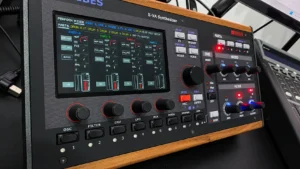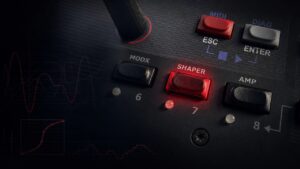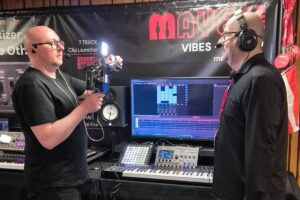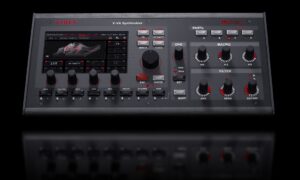

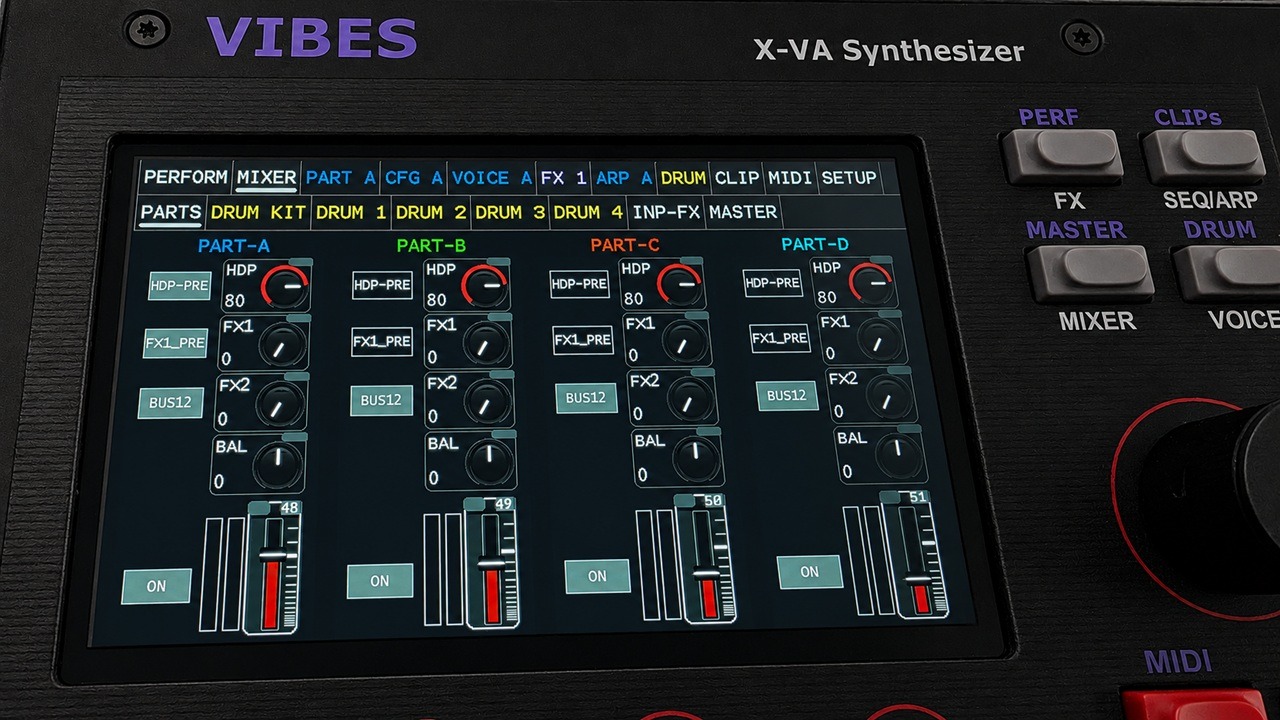
The MD850 Vibes mixer is the part that surprises people most. They come to the Mayer EMI MD850 for the wavetable synthesizer, and then they notice two things at once. There is a full 19-channel mixer living inside the instrument, and there is no big master volume knob or headphone knob anywhere on the front panel.
These two things are really the same decision. The Vibes keeps your mixing, including your output and headphone levels, inside the instrument rather than scattered across the chassis. It is worth explaining why, because once it clicks, the design stops looking like a quirk and starts looking like the point.
A lot of synthesizers are sound machines first. They make the noises, and the moment you want to balance parts, add reverb properly, sit your drums right, or protect your output, you are expected to route everything out to a computer or an external mixer. The synth makes the sound, and something else finishes the song.
The MD850 Vibes was built to be a synthesizer with a built-in mixer that does the whole job in one place. Four synth parts, a full drum kit, an external input, two effect engines, monitoring, and a master section all live in the same instrument, on the same screen. That is the difference between a synthesizer and a SynthStation: a complete place to work rather than one piece of a larger rig. The mixer is what makes that possible, and yes, that includes the master and headphone levels.
There is a volume control. It just is not a knob. The MD850 volume knob lives on the MASTER page of the mixer, and you are one click away from it at any time. That page manages your line output (OUT 1/2) and your MD850 headphone output together, so adjusting either is a single tap, the same gesture as reaching for a knob. The difference is that a screen control gives you more than a knob ever could:
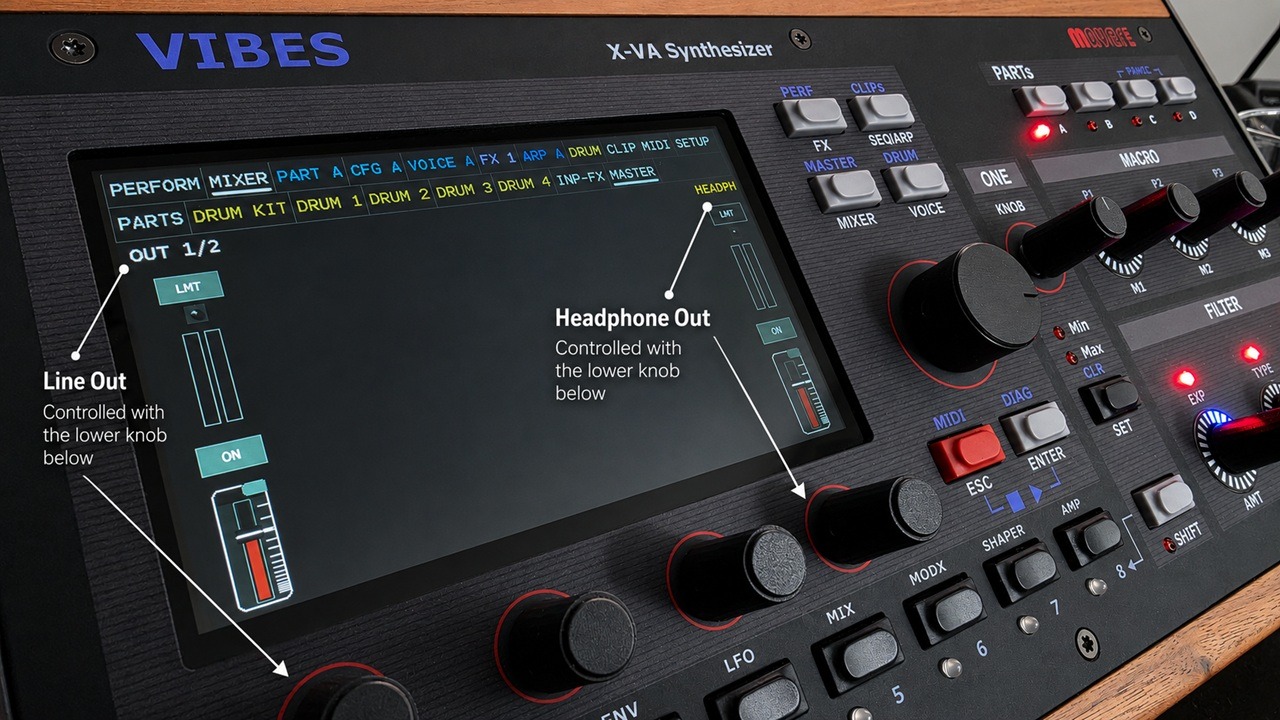
And if you genuinely prefer knobs and faders under your fingers, you can have them. Every fader in the mixer is MIDI-mappable, including the line out and the headphone level. That means any small USB MIDI controller with a few faders and knobs becomes a dedicated hardware mixer and control surface for the Vibes. Keep the panel clean and work from the screen, or set a controller beside it and mix with your hands. The Vibes does not make the choice for you.
It sounds like a wall of faders. The 19-channel mixer is really three groups you already understand:
And you do not meet all of it at once. It is organized into 8 tidy pages, so you only ever see the handful of channels you are working on. Most days you touch a few faders, and the rest waits until you go looking for it.
You do not need a mixing background to get value here. Three controls do most of the work:
That alone is a complete, finishable mix. Everything below is what is waiting when you want more.
The pumping you hear under the kick in so much electronic music is sidechaining, and it is built in. The MD850 sidechain bus listens to your drums and gently pushes the other parts down for a moment each time they hit, feeding the built-in DYNAMIC compressor. You do not have to wire anything together.
The two effect engines, FX1 and FX2, work like the send and return on a proper desk. Any channel sends a little of itself in, and the result comes back into the mix. But these are not single effects. Each return is an FX stack, and you can load up to ten effects into it, one after the other. So you have two deep processing chains, and every one of the 19 channels can reach them.
This is the part monosynth owners will want to read twice. That stereo input is not just a line in. It runs through the whole mixer, and it can be split into two independent mono channels, each with its own panning and sends. Which means you can plug in two mono synths and each one lands on its own channel inside the Vibes, treated exactly like the parts built in.
On its own, that already lets you use the MD850 Vibes as an effects processor for the gear you own. Each external synth can feed those two ten-deep FX stacks. And with the studio-grade CloudSeed reverb arriving in the Aurora update sitting at the end of a chain, your monosynth gets a reverb it had no business dreaming about.
It goes further than processing, though. The clip-launch sequencer in the Vibes can sequence an external synth over MIDI, sending notes out to those same two monosynths. So it is not only running them through effects, it is playing them. The Vibes sequences them, their sound comes back in through the stereo input, and they sit in the mix with everything else, sharing the same faders, the same sends, and the same reverb.
What that adds up to is simple. Your two outboard monosynths become two more parts inside the Vibes: four internal synth parts, a full drum kit, and two of your own voices, all sequenced, mixed, and finished in one place. The Vibes does not ask your synths to sit in the corner of the desk. It brings them into the room.
The limiter on the master output holds everything clean right up to the ceiling. It matters most when you are excited and pushing the level. Push too hard and you get a louder mix, not an ugly digital crackle. It saves more takes than you would expect.
The MD850 Vibes mixer, master and headphone levels included, is the reason the Vibes can take an idea from a blank patch to a balanced, finished track without ever leaving the instrument. Two ten-deep FX stacks, a split stereo input, MIDI sequencing out to your hardware, and a studio-grade CloudSeed reverb on the way mean it does the same for the gear you already own.
The volume knob did not go missing. It moved somewhere with a better view, and made room for the rest of your studio to come and sit beside it.