
MD900 is no longer in production. Owner resources are available below. For our current instrument, explore Vibes MD850.
Stereo synthesis.
Made hands-on.
Sixteen stereo voices. Four synth parts. A full-sized panel of knobs, faders and dedicated controls. The MD900 puts the XVA engine within reach, from the first oscillator setting to the finished performance.
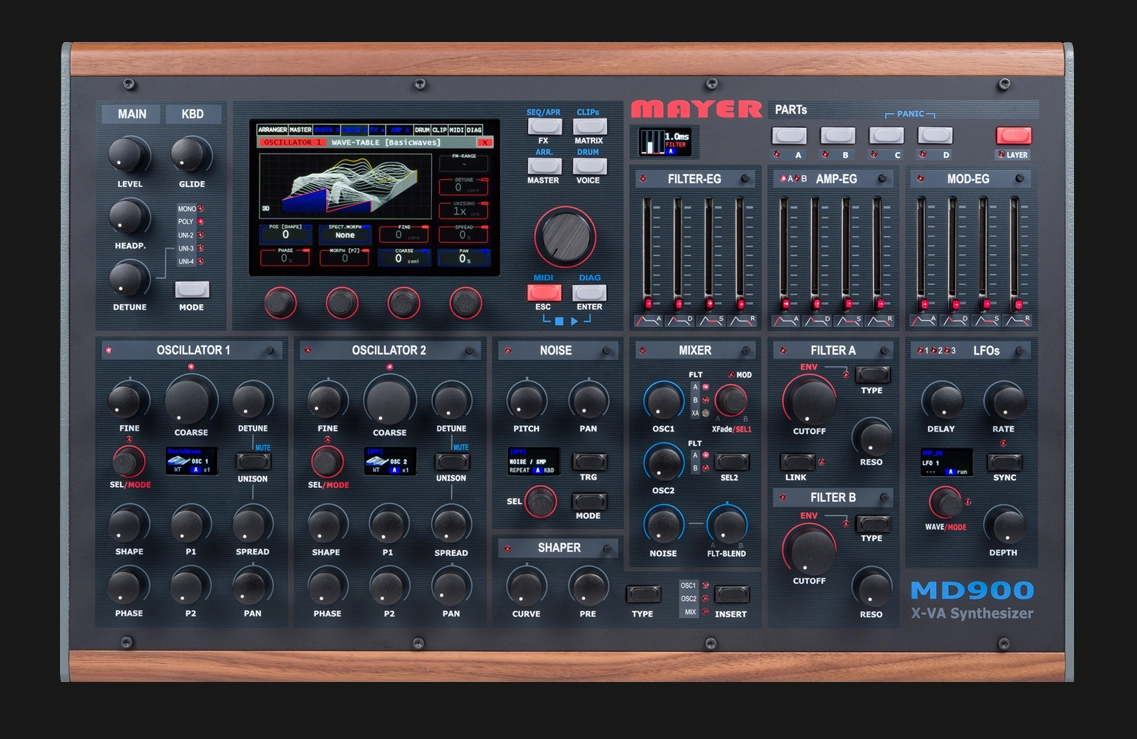
Move an envelope fader. Tune an oscillator. Open a filter. The MD900 gives these decisions their own place on the panel, so you can see and change several parts of a sound at once.
Quick Navigation buttons bring the relevant page onto the 5-inch touchscreen. With modulation teach-in, you can assign a destination directly from the panel — a practical way to turn a static patch into something that moves.
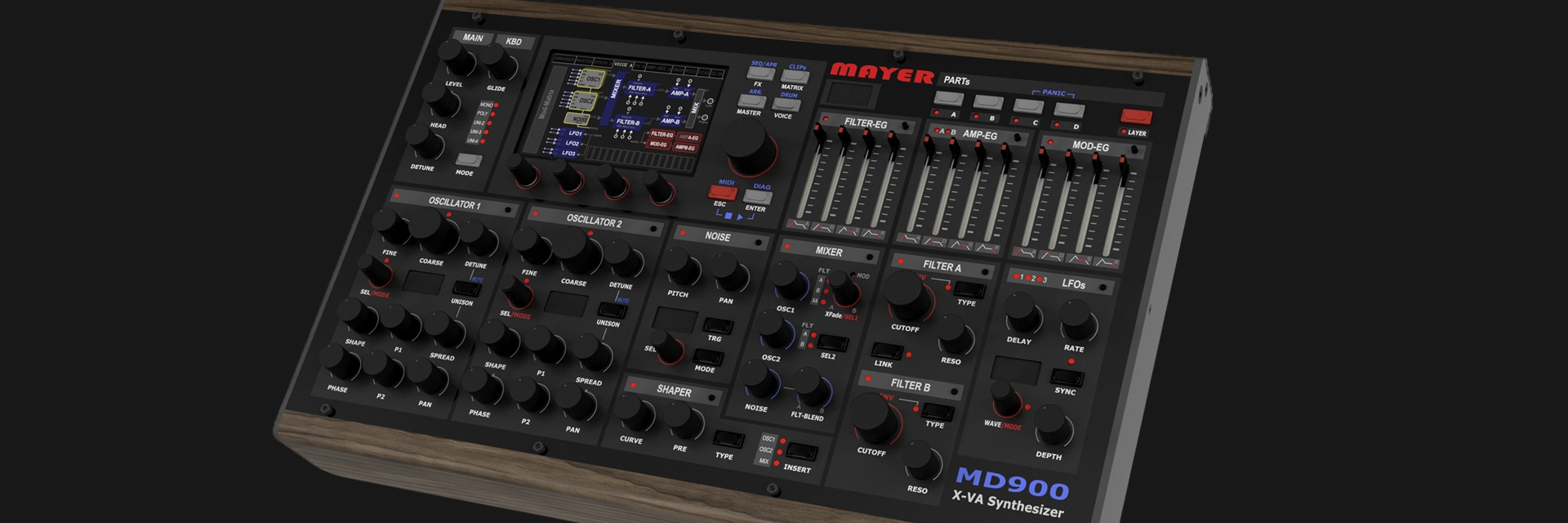
The stereo path starts at the oscillators and continues through the mixer, filters and amplifiers. Wavetable movement, oscillator pan and up to fourfold stereo unison let you build width into a patch before adding effects.
Build a bass on one part, chords on another and a lead on a third. Four synth parts share 16 stereo voices, with a separate stereo effect stack for each part. The drum computer and seven-track clip launcher bring those sounds into a performance.
The aluminium chassis, walnut front and rear rails, and 4.4 kg construction give the MD900 a substantial place on the desk. Instruments were assembled and checked by hand in Austria.
Hear a selection from the first 150 factory presets, with sound design by Limbic Bits. Listen to the patches themselves, from moving textures to more focused synth sounds.
Watch the MD900 play a set using its clip launcher, an APCmini and a USB keyboard. The performance runs on the instrument, with the controllers connected to its USB host ports.
The MD900’s documented engine and hardware specification. Software features depend on the installed version; find MD900-specific releases in Firmware & Manuals.
MD900 synthesizer, 12 V DC power supply with EU, UK, US and AUS plugs, and user manual. This describes the original supplied package.
The MD900 established Mayer EMI’s XVA instrument platform: stereo synthesis, multiple parts and a workflow built around playing the hardware.
Vibes MD850 carries that approach into a smaller, 2 kg instrument with up to 24 stereo voices and VibesConnect browser editing. MD900 presets can be transferred to Vibes; check the relevant manuals and software versions when moving your library.
Already have an MD900? Go straight to the owner resources below for documentation, downloads and help with your instrument.
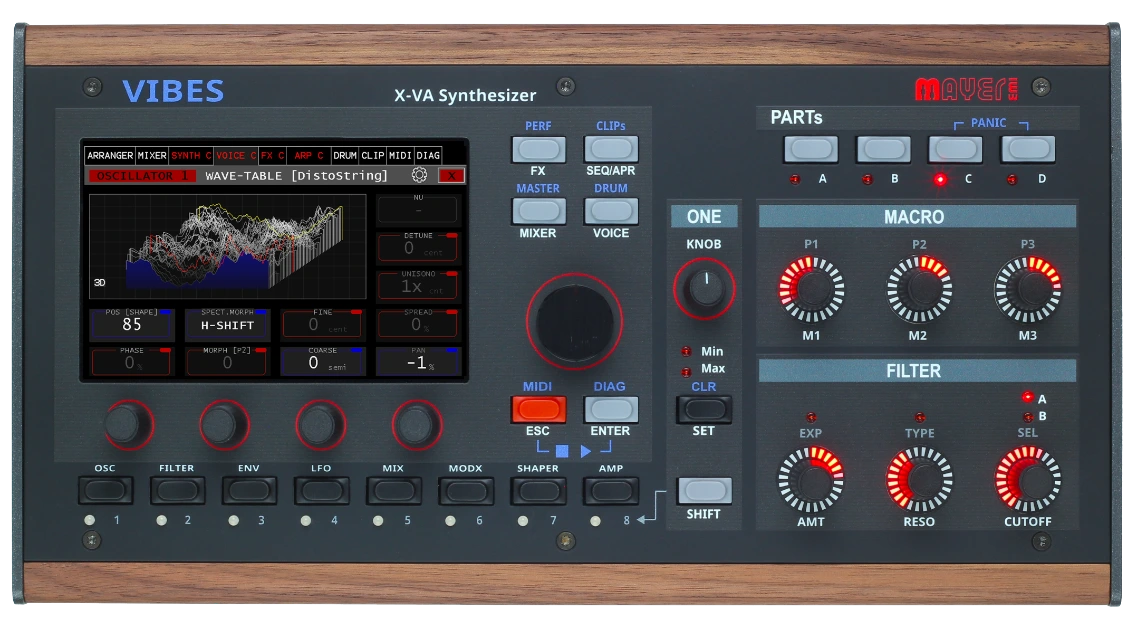
Find the right software for your MD900, look up a function, or get help from the team. MD900 downloads are listed separately from Vibes firmware.
Owner’s manuals, quickstart guides, software downloads and installation instructions for the MD900.
Discuss patches, ask workflow questions and exchange ideas with other Mayer EMI users.
Tell us your software version and what you need help with. For a technical issue, a short description of the steps helps us investigate.
Explore Vibes MD850: up to 24 stereo voices, four synth parts and VibesConnect, in a 2 kg desktop instrument.